
How Operations Management Improves Workplace Efficiency and Safety Compliance
In today’s fast-paced and rapidly transforming world, operational efficiency and workplace safety are not two separate goals; instead, they are two sides of the same coin.
From the floor of a manufacturing facility to remote teams, organizations have come to realize that their sustainable success relies entirely on their effective management of daily operations, risk anticipation, and compliance management.
What is Operations Management?
Operations Management involves the design, operation, and improvement of processes that efficiently, effectively, and safely transform inputs into products and services. It encompasses everything from planning and scheduling to inventory management, logistics, and quality control, and is fundamental to ensuring performance.
It encompasses everything from planning and scheduling to inventory management, logistics, and quality control, and involves everyone in ensuring a case for performance.
Why Efficiency and Safety Compliance are Linked
Gone are the days when traditional methods could suffice, especially now that we are in the age of hybrid working, digital transformation, and strict compliance regulations.
That’s where operational risk management comes in, along with modern software tools that bring visibility, consistency, and control across every layer of operations.
This blog explores the importance of effective operations management, powered by digital tools, in enhancing workplace productivity and safety compliance, ultimately improving risk mitigation.
How Software Optimizes Efficiency and Safety
In the industry, every successful organization stands on the foundation of effective operations management. The aspect of securing and moderating efficiency beyond the forwarding of flows remains.
It is not until digital instruments and systems are put into use that a company has the capacity to eliminate bottlenecks, minimize risks, and establish a world of predictable and compliant setups.
Key Advantages of Operations Management
Below are the key importance of operational risk management in implementing technology measures, which assist a firm in maximizing operational efficiency and complying with safety requirements.
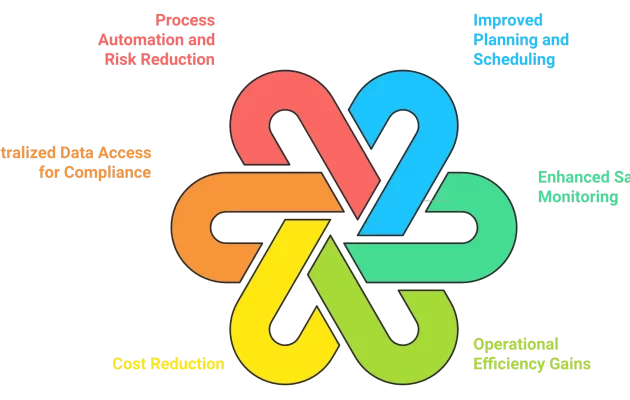
Process Automation and Risk Reduction
Once one of the most effective outworkings of superior operations management, automation features prominently on this list. By utilizing innovative systems to automate repetitive manual tasks, companies can minimize human error and exposure to hazards.
For example, a utility company has previously relied on paper-based maintenance checklists to record maintenance work. With this digitalized setup, the system automatically flags checks that are overdue or raise safety concerns, generating alerts through the system to supervisors.
Improved Planning and Scheduling
Managers can plan to avoid potential bottlenecks, allocate work appropriately, and ensure that no resources are overstretched by utilizing operational risk management frameworks in conjunction with data-driven scheduling tools.
For example, when a construction company has multiple ongoing projects, using business management for contractors, they can assess workforce availability, equipment deficiencies, and safety from a single dashboard.
Centralized Data Access for Compliance
If critical data resides in one place, compliance becomes much easier. A thoroughly integrated system should incorporate incident logs, training records, and audit reports in one digital platform that both onsite and remote teams can access.
Operational risk management software can help an organization generate real-time compliance reports and determine if corrective actions are being implemented.
Enhanced Safety Monitoring
Now, companies are identifying hazards even in advanced settings, thanks to more advanced monitoring systems, and as a result, they will be better equipped in terms of response.
A manufacturing facility, for example, will utilize IoT sensors to monitor the performance of its equipment. An instance of abnormal vibrations or temperature spikes detected will automatically trigger maintenance alerts.
Operational risk management processes, combined with real-time monitoring of operations, transform safety from a mere checklist into an absolute practice of continuous vigilance and care.
Operational Efficiency Gains
The most visible result of effective operational management is sustained operational efficiency. Any improvements in automation, compliance, or planning multiply productivity gains.
For instance, an analytics tool may be used by a logistics company to optimize its delivery routes. The same tool can draw on past experiences to estimate the risk level of specific routes and adjust their plans accordingly.
Why Manual Processes Put Efficiency and Safety at Risk
Organizations can struggle and experience friction when they perform operations that are only partially engaged with manual and disconnected tools. Without such an approach to operational risk management, communications suffer, processes become uncertain, and data become scattered across spreadsheets or paper documents.
The evolution of industries brings with it an increase in complexity, and without digital integration, businesses face operational challenges. Manually collected reports tend to delay decision-making, while inconsistent risk assessments pave the way for accidents or noncompliance.
Thus, switching to SaaS operations management solutions becomes pivotal in transforming all these chaotic workflows into structured, data-driven systems.
The Risks of Fragmented Operations
Incorporating business management software for contractors ensures consistency throughout the entire company. By automating checklists, assigning responsibilities, and standardizing forms, a company can reduce the variability of process applications and ensure consistent adoption of best practices.
The following are the most common problems that companies face when they lack a coordinated operations management strategy, along with how technology helps mitigate these issues.
Human Errors & Inconsistent Practices
The lack of training records, inspection logbooks, or expired safety certifications can easily lead to violations and fines. For organizations where compliance data is not consolidated, the consequence is panic when an internal audit is conducted, as they try to organize all documents, wasting time and stress in itself.
Incorporating SaaS operations management tools can help companies automate compliance workflows and reminders for key activities, such as renewals and certifications.
Compliance Violations & Audit Difficulties
Duplicated tasks and redundant efforts become commonplace due to a silo-based work culture among departments. Employees often wasted hours searching for documents or re-entering data that already exists elsewhere.
The field service company, for example, might track equipment maintenance manually, while the finance department creates separate logs of costs. The two systems are not integrated and, therefore, do not communicate with each other, resulting in overspending on repairs and procurement.
Resource Inefficiencies
Once the operations are not in order, even very small inefficiencies would compound into larger losses. Projects are delayed, compliance lapses become more significant, and frustration grows. Over time, the business loses money internally and externally, and other companies would not trust that organization.
Did You Know?
“Manual workflows can reduce operational efficiency by as much as 25%, while error rates can be up to 30% higher compared to digital process management systems. Companies that rely on non-automated processes face inefficiencies, higher operating costs, and reduced visibility.”
Making the Most of Operations Management
Whether we are talking about manufacturing, construction, or logistics, an organization with clear business operations management is better positioned to foresee risks and be prepared to tackle challenges.
Improvements will occur if operational risk management steps in. They offer a well-structured guideline under which all potential risks must be assessed, controlled, and monitored while increasing productivity and ascertaining compliance.
Operational Risk Management Steps & Processes
With structured operational risk management processes in place, industries are rapidly adopting measures to maintain safety, consistency, and productivity across departments.
Below are some key strategies and best practices that organizations can use to manage operations, thereby enhancing efficiency and safety simultaneously.
Structured Risk Management Process
Risk management processes are at the core of every successful operation. It is a repetitive process, and these operational risk management steps typically include: identification, analysis, risk mitigation, record-keeping, and risk monitoring.
If risks are identified, such as malfunctioning equipment, or have already been logged into a digital platform. The system automatically notifies the supervisors, assigns a corrective task, and tracks completion.
Staff Training & Certification
Once the operations are not in order, even very small inefficiencies would compound into larger losses. Projects are delayed, compliance lapses become more significant, and frustration grows. Over time, the business loses money internally and externally, and other companies would not trust that organization.
Monitoring KPIs & Metrics
The company doesn’t just need to train employees once on safety and efficiency; it also needs to reinforce these skills continually.
There must also be a continuous evaluation of key performance indicators (KPIs) that enable supervisors to assess the effectiveness and efficiency of the steps taken to manage operational risk.
Leveraging SaaS & Cloud Solutions
Cloud-based and SaaS applications in operations management simplify team collaboration and accelerate documentation, while providing remote access to data.
The implementation of business process optimization techniques is also simplified by adaptable workflow automation that evolves with changing requirements.
Software & Tools Transforming Efficiency and Safety
Today, the industry’s core technology is advancing to enhance safety and improve business and operational results.
Key Categories of Operational Software
The following are key software categories that exemplify how technology drives operational risk management and business operations management through structure, automation, and insight.
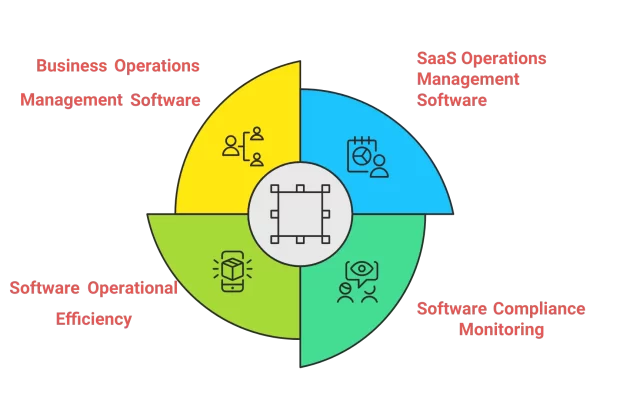
Business Operations Management Software
Business operations management software integrates day-to-day functions, including scheduling, resource allocation, budgeting, and report management.
The construction company, for example, had been using paper systems for recording various projects, having missed updates and scheduling inefficiencies. Since they switched to operations management software, the project managers now monitor all projects.
It simplifies operations and enhances collaboration between departments; however, setting it up can be time-consuming, and careful planning is necessary to ensure adequate training is provided.
SaaS Operations Management Software
One of the key benefits of SaaS operations management software is that it is typically entirely accessible via the cloud, enabling teams to run operations from almost anywhere.
For example, one utility services provider chose a SaaS platform to help manage its safety inspections across field sites. Field staff submit their inspection results on a mobile device while management receives instant updates at headquarters.
Operational Efficiency Software
Operational efficiency software addresses analytics and automation by identifying process bottlenecks, reducing waste, and applying business process optimization techniques for continuous improvement.
For example, an efficiency software application in operation at a manufacturing plant analyzes production data and schedules preventive maintenance, reducing downtime by 20% and improving output consistency.
Compliance Monitoring Software
The automated safety compliance monitoring tool enables the central collection of safety inspections, reports, and training materials, thereby ensuring compliance with regulatory requirements and maintaining a safe workplace.
For example, a logistics company is using compliance monitoring software to keep records of certification and inspection of drivers’ vehicles without an automatic expiry date warning.
Safety monitoring is automated, and accountability is strengthened across teams. However, large volumes of data can overwhelm users in the absence of adequate filtering and sorting by the system.
Emerging Trends in Workplace Efficiency and Safety
As industries become increasingly digitized and transformed, so do their operational risk management. Companies are moving toward predictive, intelligent, data-driven systems, which are being adopted from traditional safety practices and compliance tracking, rather than their reactive forms.
Next-Gen Operational Risk Management
From AI to cloud-based collaboration tools, next-generation platforms will transform the way organizations ensure real-time efficiency and safety.
The following are emerging trends defining the next evolutionary phase of workplace operations and compliance.
AI-Powered Predictive Monitoring
AI is increasingly becoming the foundation of software for operational risk management, given its efficiency in analyzing patterns from large amounts of operational data to predict potential failures, safety incidents, or inefficient workflows.
For example, using predictive AI models to monitor vibration and temperature data from machinery in an industrial facility. When the system detects a malfunction, it autonomously alerts the maintenance personnel to take necessary action.
Such an approach shifts corrective risk management into preventive action, which is actually ideal for what operational risk management should achieve: prevention of operational disruption impacts and likelihood while safeguarding employees and assets.
Automated Risk Alerts and Reporting
Whereas traditional reporting methods tended to be slow and dependent on manual entry, which could delay decisions, automated alert systems eliminate these constraints, sending immediate notifications to key stakeholders.
For example, a construction site where environmental sensors detect unsafe air quality levels. An automated scheme can, for example, warn site supervisors, stop operations, and develop a real-time compliant report.
The benefit of an instant communication loop is that safety and responsiveness can be achieved more easily, while also ensuring that all gathered information is uniform and accurate for auditing and continuous improvement purposes.
Digital Integration of Safety and Operations
In the near future, safety and operational systems will no longer remain disconnected. Integrated platforms would combine such elements to provide a standard view of performance and safety data for teams.
When safety is built directly into operational workflows, compliance occurs naturally, as a by-product of everyday work. It places the manager in a position to balance productivity with protection comfortably through wiser decision-making, leading to enhanced operational resilience.
Such digital convergence also encourages collaboration by giving HR, safety officers, and project managers common visibility and standardized processes.
Cloud-Based Solutions for Remote Teams
All safety reports, training certifications, and operational data can now be accessed from anywhere in the world in real-time through the cloud-based systems.
For instance, this would be a cloud platform used by a logistics company with drivers in different regions, providing a common platform for capturing compliance metrics. Accessing online ensures that incidents are logged as they occur, and updates to training records are recorded in real-time.
Additionally, cloud solutions provide scalability, enabling organizations to expand without compromising control over compliance and efficiency. It will implement cost cuts in response to reduced demand for onsite infrastructure.
Looking Ahead
Agility, intelligence, and integration will be the defining components of future operational risk management; predictive software and connected systems will enable organizations to transition from merely monitoring risks to truly mastering them.
The ultimate aim of operational risk management is to protect people, processes, and performance. With AI, automation, and cloud innovation driving the charge, organizations can achieve this goal with precision, clarity, and speed.
Elevating Efficiency and Safety with Operations Management
The modern workplace demands more than just productivity; it also requires protection, adaptability, and foresight. Operations management can simplify processes from the point of accountability and compliance throughout the organization.
The exposure of organizations to efficiency and safety processes as dynamic improvement processes is achieved through the conduct of formal operations risk management steps, investment in training and certification, and the initiation and employment of digital tools.
In operations management software as a service and operational risk management software, these tools are used to realize this shift, connecting teams, automating reports, and protecting team members’ work environment and productivity.
Are you ready to go on the next level in efficiency and safety in your workplace? Visit WorkAware’s operational risk management software solution to help organizations organize, manage, and enhance their safety culture.
Visit WorkAware to find out more or request a demo.
Frequently Asked Questions
Q1: What is an Operations Manager?
Answer: An Operations Manager (OM) is a critical leadership role responsible for overseeing the day-to-day production, logistics, and administrative functions of a business to ensure maximum efficiency and productivity. They bridge the gap between high-level strategy and daily execution, ultimately ensuring the company delivers its products or services effectively and profitably.
Q2: What does an Operations Manager do? / What do Operations Managers do?
Answer: An Operations Manager’s primary role is to design, implement, and maintain efficient systems across the organization.
Q3: How much does an Operations Manager make?
Answer: The salary for an Operations Manager is highly variable, influenced by industry, location, company size, and years of experience.
Average Annual Salary: Based on US data, the average base salary often falls around $75,000 to $100,000 per year.
Typical Range: The majority of OMs earn a base salary between $65,000 and $120,000, with senior or executive-level roles (like Director of Operations) in major metropolitan areas exceeding $150,000.
Factors that Increase Salary: Specialization (e.g., Product Operations, Supply Chain), advanced education (MBA), and experience in large corporations are key drivers for higher pay.