WorkAware

Safety Management is critical during a pandemic. WorkAware helps companies manage COVID-19 in the work site Learn More

Geographic Information System Software

Powerful Mapping with Geographic Information System Software

What is GIS Software?

Geographic Information System (GIS) software is a powerful digital tool used to capture, manage, analyze, and visualize location-based data. It allows organizations to transform geographic information into meaningful insights through maps, spatial analysis, and interactive dashboards. 

Modern GIS software helps businesses, governments, and industries understand patterns, relationships, and trends related to location data. By using advanced geospatial tools and geospatial map data solutions, organizations can improve planning, safety management, infrastructure monitoring, and operational efficiency

Features of Geographic Information System Software

A robust geospatial GIS platform offers a variety of features designed to manage and analyze spatial information effectively. Some key features include:

  • Interactive GIS mapping software that allow users to create and customize geographic maps
  • Advanced GIS Analysis Software for identifying patterns and trends in spatial data
  • GIS Softwares for organizing and processing large geographic datasets
  • Geographic Software for collecting and accessing field data in real time

Our Geographic Information System Software Expertise​

At WorkAware, we provide best GIS software solutions designed to help organizations turn geographic data into actionable insights. As a trusted geospatial software solution, WorkAware delivers innovative GIS mappoint software that support safety management, infrastructure monitoring, and data-driven decision-making.

1- Mapping and Visualization

WorkAware’s GIS services company transforms complex spatial data into clear, interactive maps. It helps organizations visualize assets and monitor locations in real time.

2- Spatial Analysis

Our geospatial analysis software identifies patterns and relationships in geographic data. It enables informed decision-making, risk assessment, and optimized planning.

3- Location Intelligence

WorkAware delivers geospatial intelligence software that turns location data into actionable insights. Businesses can enhance resource allocation and strategic operations efficiently.

4- 3D Visualization Software

Our 3D visualization tools allow immersive exploration of geographic data. Users can analyze terrain, infrastructure, and spatial relationships in a realistic environment.

Benefits of Using GIS Software

Implementing the best GIS software provides several advantages for organizations across industries.

  • Improved Decision-Making through accurate geographic insights
  • Enhanced Operational Efficiency using advanced geospatial tools
  • Better Data Visualization with interactive GIS mapping programs capabilities
  • Scalable Geospatial Solutions that grow with business needs
  • Real-Time Field Data Collection through mobile GIS software

Many organizations partner with experienced geographic services companies to implement advanced geospatial solutions that improve planning, safety management, logistics, and environmental monitoring.

Types of GIS Software​

The GIS software industry provides a broad range of solutions, including both commercial and open-source products available in desktop, server, and cloud-based platforms.

1- Commercial GIS Software

Commercial software GIS is developed by established GIS software companies. It offers enterprise-grade tools, technical support, and advanced analytics for large-scale projects.

2- Open-Source GIS Software

Open-source GIS platforms provide flexible and cost-effective geographic software solutions. Users can customize features and integrate various geospatial tools for specific project needs.

3- Server GIS

Server GIS allows organizations to store, manage, and share spatial data across networks. It supports collaboration and centralized access to geospatial map data solutions.

4- Cloud-Based GIS Platforms

Cloud-based GIS platforms provide scalable geospatial solutions accessible from anywhere. They enable real-time data sharing, collaboration, and integration with enterprise systems.

FAQs

What is GIS software, and what does it do?

GIS software, or Geographic Information System GIS software, is a type of GIS software used to capture, store, analyze, and visualize geographic data. It helps organizations transform location-based information into actionable insights through maps, dashboards, and geospatial analytics software. Businesses, governments, and geospatial services companies use GIS to improve planning, asset management, safety monitoring, and decision-making.

What are some common features of GIS software?

Most GIS software solutions include features such as interactive mapping, spatial data analysis, data visualization, and location intelligence tools. Many platforms also include mobile geographic software for field data collection, geospatial grid software for managing large datasets, and advanced geospatial analysis software for identifying patterns and trends in geographic information.

How can AI be used to improve the accuracy of GIS data?

Artificial intelligence can enhance geospatial solutions by automatically detecting errors, filling missing data, and improving the quality of spatial datasets. AI-powered geospatial intelligence software can analyze satellite imagery, sensor data, and geographic patterns to produce more precise and reliable geospatial map data solutions.

Can AI be used to automate the process of creating maps in GIS?

Yes, AI can automate many mapping tasks within a geospatial platform. AI algorithms can classify satellite images, detect geographic features, and automatically generate maps. This helps GIS software companies deliver faster and more accurate geographic software solutions while reducing manual work.

How can AI be used to analyze patterns in geospatial data?

AI enhances geospatial analytics software by identifying patterns and relationships within large spatial datasets. Machine learning models can analyze geographic trends, detect anomalies, and uncover insights that might be difficult to identify manually. This helps organizations make better decisions using advanced geospatial tools and geospatial analysis software.

Can AI be used to predict future environmental changes based on GIS data?

Yes, AI combined with geospatial intelligence software can analyze historical geographic data to predict future environmental changes. These geospatial solutions can forecast climate patterns, monitor deforestation, and assess natural disaster risks. Many geospatial services companies use AI-powered geospatial platforms to support environmental planning and sustainability initiatives.

Take Care of Clients with a Comprehensive GIS Software Platform

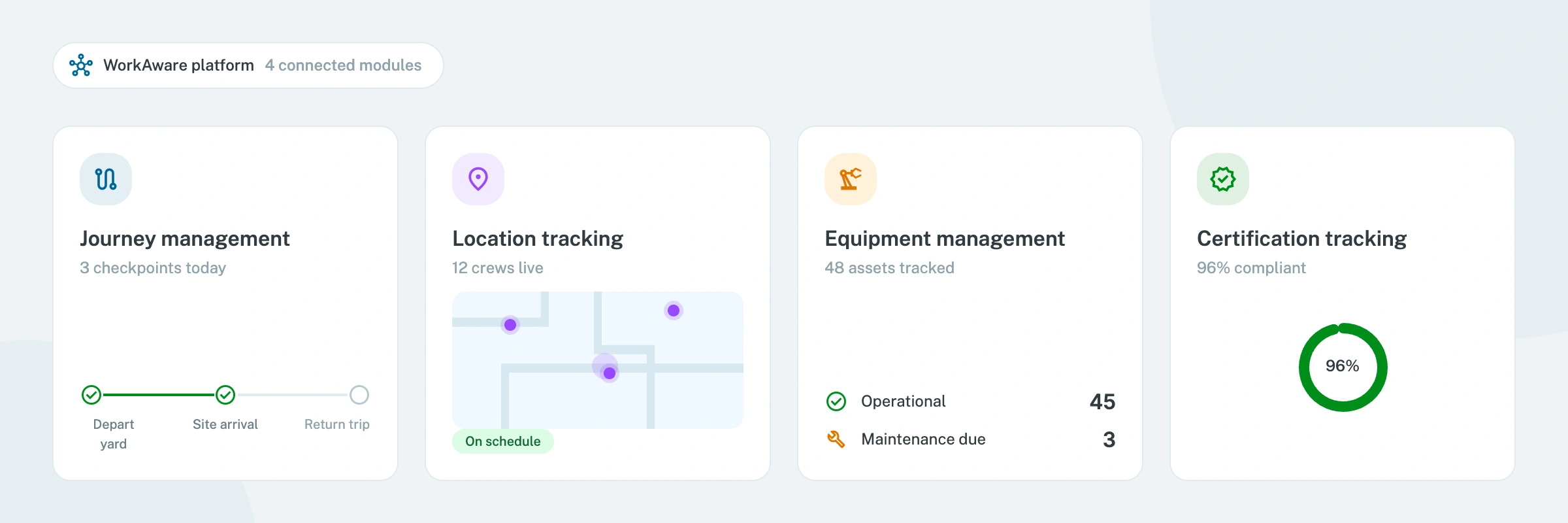
Get in touch with us, and we will deliver a personalized demonstration of our software features including; People and Asset Management, Digital Forms, Tracking, Journey Management, Geospatial Mapping System, and more, with the option of multiple test user accounts in our live demo environment. A member of our team will contact you shortly.

Talk to our 24/7 Customer Service teams:

US Office: 312-761-5423

Canada Office: 647-249-1622